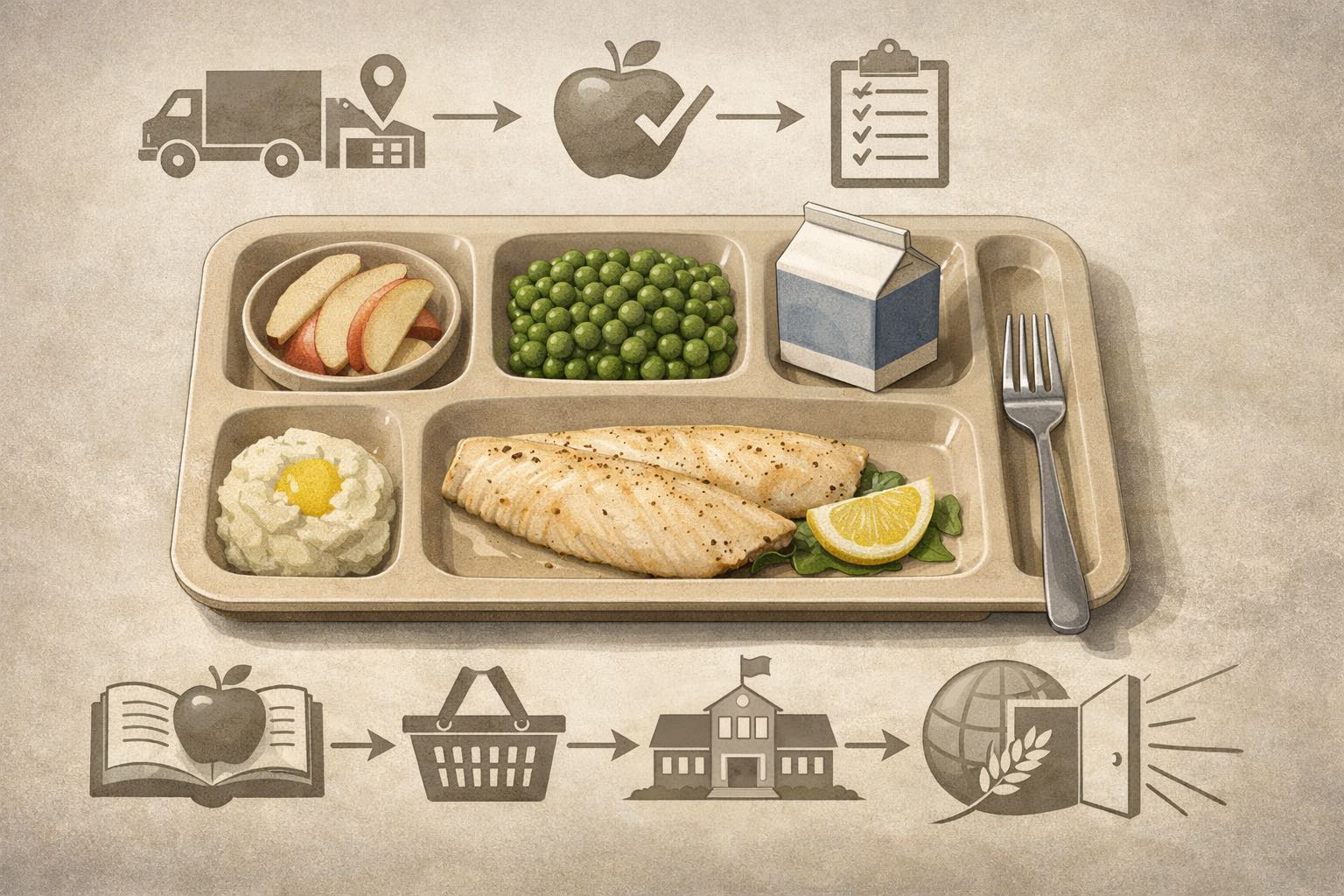
The most important seafood meal in America might not be served with linen napkins. It might be served on a plastic tray under fluorescent lights at a school cafeteria where lunch needs to be fast, familiar, and budget-proof, or in a hospital where a dietitian is trying to help someone regain strength one gentle bite at a time.
In those settings, “access” isn’t a slogan. It’s a system: procurement rules, product specs, food-safety documentation, and a cold chain that has to work every day, not just on the best days. Pacific Seafood’s 2024 CSR report frames its role in that system plainly: through a partnership with the USDA, Pacific provides healthy seafood to food banks, schools, and organizations in all 50 states.
That single sentence hides a surprisingly complex story, one where nutrition goals meet public purchasing requirements, and where seafood companies win by making it easier for institutions to say “yes.”
The School Meal Reality: Seafood Is Recommended yet Rarely Served
The U.S. Dietary Guidelines encourage seafood as part of a healthy protein pattern, and federal watchdogs have noted the gap between recommendation and reality. A GAO report on the National School Lunch Program (NSLP) states that school-age children should consume 4–10 ounces of seafood per week (per the Dietary Guidelines), but in practice, seafood made up just 1–2% of USDA’s animal-protein purchases for NSLP about 3 ounces per student per year across FY 2014–2019.
Pacific’s CSR report echoes that shortfall and positions the company’s USDA partnership as part of the solution, pointing to the same “about 3 ounces annually” benchmark and emphasizing continued efforts to get more seafood into school channels.
The optimistic read here is not “schools are failing.” It’s: schools are the biggest nutrition stage in the country and seafood access is a growth opportunity when the logistics and paperwork are made easier.
What Procurement Standards Actually Enable Seafood Access
1) Buy American Rules Shape Which Seafood Can Be Served
In the last few years, Buy American requirements have been strengthened and clarified for Child Nutrition Programs. USDA’s guidance explains that for fish and fish products:
- Farmed fish must be harvested in the United States (or U.S. territories/possessions).
- Wild-caught fish must be harvested in the U.S. Exclusive Economic Zone or by a U.S.-flagged vessel.
Those details matter because they translate “domestic preference” into practical sourcing rules especially important for institutions that want to support U.S. fisheries and simplify compliance documentation.
2) Procurement Has to Follow Formal Rules Not Just “Best Price”
School food authorities operate under procurement standards outlined in regulation (including 7 CFR 210.21), which ties school purchasing to broader federal procurement rules and requires written procedures and documented compliance.
This is where a supplier’s operational maturity becomes a public-good enabler: when documentation is clean, specifications are clear, and domestic sourcing is verifiable, seafood becomes easier to buy, not just desirable.
3) Usda Foods Can Lower Barriers Through Standardized Offerings
For many districts, USDA Foods is the practical on-ramp: it reduces price volatility and simplifies product selection through known items and specs. USDA itself highlights school-available seafood options such as Alaska pollock and catfish, including pollock in bulk for processing and as whole grain-rich breaded fish sticks, along with whole grain-rich breaded catfish fillet strips.
These formats are not an accident. Breaded portions are familiar to students, easier to prepare at scale, and predictable for menu planning, exactly the kind of “institution-friendly” design that helps seafood appear more often.
Where Pacific Seafood Shows Up: Access Is Built Like a Supply Chain
Pacific’s 2024 CSR report describes a USDA partnership that began in 2020 and notes that USDA has committed to receiving West Coast seafood products from Pacific and other processors, helping move regional seafood into national nutrition channels.
What makes that feasible, in practice, is the unglamorous infrastructure that institutions depend on: reliable distribution, consistent product forms, and traceability strong enough to satisfy public procurement scrutiny. Pacific’s CSR report describes a broad distribution footprint (including multiple distribution facilities and transportation capabilities) designed to keep seafood consistently available across markets.
If you’re a school nutrition director or a food bank partner, you don’t need a poetic brand story, you need a delivery that arrives when promised, labeled correctly, and ready to serve.
Hospitals: “Food As Part of Care,” Backed by Purchasing Guidance
Hospitals operate under a different set of incentives than schools: patient outcomes, therapeutic diets, and the reality that malnutrition risk is not theoretical in clinical settings. When hospitals increase seafood offerings, it’s often because seafood fits multiple objectives at once: lean protein, versatility across cultural preferences, and suitability for softer or modified textures when prepared appropriately.
Many hospital systems also use sustainability-and-health procurement frameworks to guide purchasing decisions. Practice Greenhealth’s seafood purchasing guide, for example, offers structured recommendations hospitals can use to navigate seafood choices balancing nutrition, sustainability, and transparency expectations.
The key point for a “nutrition access” story is that hospitals rarely buy on impulse. They buy through policies, vendor qualification, and standards. Suppliers that can provide strong traceability, dependable specs, and consistent quality help hospitals include seafood more confidently on menus whether it’s a patient tray, a staff cafeteria, or a community wellness program hosted by the health system.
Community Programs: Food Banks, Schools, and the Power of a Dependable Partner
Community nutrition work is often the fastest-moving part of the ecosystem: a school district adds a seafood item for a special menu; a food bank needs protein for a distribution surge; a local nonprofit coordinates meal support for families. In Pacific’s CSR narrative, this work is core identity not a side project especially through the USDA partnership’s national reach.
One of the smartest things the CSR report does is connect “access” to a broader philosophy: reduce food waste, improve utilization, and make healthy protein available without putting strain on resources, an approach that supports both affordability and availability in institutions serving diverse communities.
What “Works” When Institutions Try to Serve More Seafood
From procurement professionals to dietitians, the playbook is surprisingly consistent:
- Institution-Ready Formats: Breaded portions, burgers, bowls, and ready-to-cook packs reduce training burden and improve consistency (especially in schools).
- Procurement-Aligned Sourcing: Buy American compliance and clear documentation reduce delays and exceptions.
- Menu Confidence: Recipes, prep guidance, and predictable specs make seafood repeatable meaning it shows up more than once per year.
Partnership Scale: A supplier that can reliably serve many regions helps programs expand beyond pilot status exactly what Pacific’s USDA partnership is designed to support.